

“A person drinks around 40,000 liters of water over a lifetime. And the quality of that water cannot be irrelevant to the human body.”
Water is part of our everyday lives. We drink it, use it to make coffee and tea, and prepare soups, vegetables, rice, pasta, and countless other meals with it. Yet while we often focus on how much water we drink, we rarely stop to think about the quality of the water we consume over many years.
40,000 Liters – A Number Worth Thinking About
When we look at water consumption not from the perspective of a single day, but across decades of life, the amount becomes enormous.
We are talking about tens of thousands of liters of water consumed by the human body over a lifetime.
That is why the quality of drinking water should never be treated as a secondary issue.
It is also important to remember that water that looks clear is not necessarily identical in quality. Two glasses of water may look exactly the same while having very different parameters. They may differ in mineral content, hardness, dissolved substances, taste, or odor.
Clean Water Starts With Knowledge
As a water treatment system installer and service technician, I have encountered water with very different parameters over the years. Problems with water quality are not always immediately visible.
Sometimes it takes water testing, measurements, or simply everyday use to reveal the differences. Scale inside a kettle, deposits on faucets and fixtures, unpleasant odors, unusual taste, or sediment appearing in appliances are all signs worth paying attention to.
Before choosing any water treatment method, the first step should therefore be to determine what kind of water we are dealing with and what result we want to achieve.
Not Every Type of Water Requires the Same Treatment
There is no single filtration system suitable for every home and every water source.
Municipal water may require a completely different approach from water supplied by a private well. Depending on the problem, treatment methods may include mechanical filtration, activated carbon filtration, water softening, iron removal, UV disinfection, or reverse osmosis.
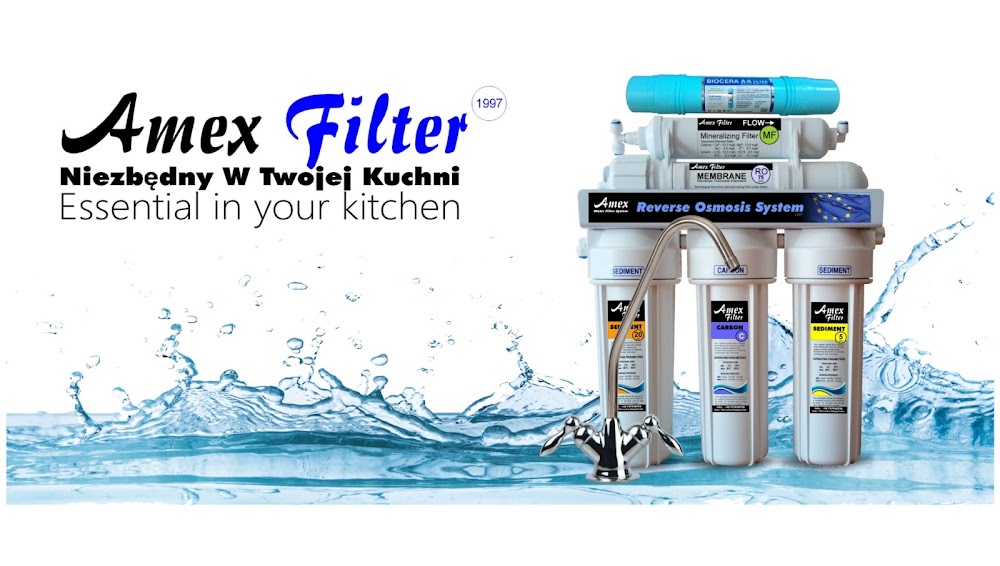
For water intended primarily for drinking and food preparation, one possible solution is a reverse osmosis (RO) system. RO systems provide highly effective point-of-use water purification, typically installed directly in the kitchen.
However, this does not mean that reverse osmosis is necessary in every home. A properly designed water treatment system should be selected according to the actual water parameters and the desired water quality – not simply by the name of the equipment.
It Is Not Just the Filter – Maintenance Matters Too
Even a high-quality filtration system requires proper maintenance.
Filter cartridges have a limited service life. Over time, they collect contaminants and gradually lose their effectiveness. Regular cartridge replacement, system inspection, sanitization where required, and periodic monitoring of water parameters are therefore important parts of responsible water treatment.
Buying a water filter is not the end of taking care of your water quality. In many ways, it is only the beginning.
Think About Water Over an Entire Lifetime
A single glass of water may seem insignificant.
But glasses become liters. Liters become hundreds and then thousands. Over an entire lifetime, the total becomes tens of thousands of liters.
So perhaps the question should not only be:
“Am I drinking enough water?”
There is another question worth asking:
“What kind of water am I drinking every day?”
Because if we drink around 40,000 liters of water over a lifetime, the quality of that water certainly deserves our attention.


