
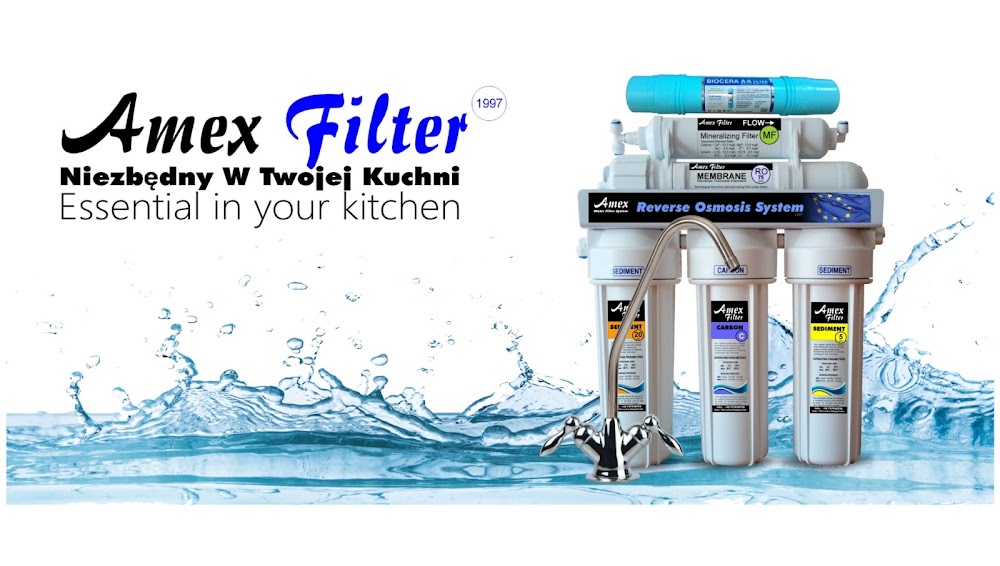

If you're considering a reverse osmosis (RO) system for your home, one of the first decisions you'll face is whether to choose a traditional system with a storage tank or a modern tankless design.
Both options can provide high-quality drinking water, but they differ significantly in size, installation requirements, water production, and everyday use.
So which one is right for your kitchen?
Traditional RO Systems with a Storage Tank
For decades, storage tank systems have been the most common type of reverse osmosis installation.
These systems produce purified water slowly and store it inside a pressurized tank until it is needed.
Advantages
✔ Proven and reliable technology
✔ Lower initial purchase cost
✔ Wide range of available models
✔ Easy access to replacement filters and components
Considerations
✘ Require additional space for the storage tank
✘ Lower water production rate
✘ Larger overall installation footprint
Because of the storage tank, these systems typically require more space under the sink. In smaller kitchens, installation can sometimes be challenging.
Modern Tankless RO Systems
Tankless systems have become increasingly popular in recent years.
Instead of storing water in a tank, they produce purified water on demand using high-capacity membranes and, in many cases, booster pumps.
Advantages
✔ Compact design
✔ Faster water production
✔ More available storage space under the sink
✔ Modern appearance and simplified maintenance
✔ Excellent solution for small kitchens
Considerations
✘ Higher purchase price
✘ Dependence on electrical power for systems with booster pumps
✘ More advanced electronics in some models
Because of their compact dimensions, tankless systems are often the preferred choice for modern kitchens equipped with pull-out waste bins, drawers, or limited cabinet space.
Which System Fits Your Kitchen?
The answer depends less on the system itself and more on the available installation space.
Tank Systems Are Often Ideal When:
- You have a large cabinet under the sink.
- You have an 80 cm cabinet or a corner cabinet.
- Storage space is not a concern.
- You prefer a traditional and proven solution.
Tankless Systems Are Often Ideal When:
- Cabinet space is limited.
- Your kitchen includes pull-out waste bins.
- You want to maximize storage space.
- You prefer a compact and modern installation.
There Is No Universal Answer
One of the most common mistakes homeowners make is selecting a system before evaluating the available installation space.
In my experience, the best reverse osmosis system is not necessarily the most expensive one—it is the system that fits both the kitchen and the customer's expectations.
That is why I always recommend assessing the available space before making a final decision. In many cases, a few photos of the sink cabinet are enough to determine which solution will work best.
Final Thoughts
Both traditional and tankless reverse osmosis systems can provide excellent drinking water quality.
The key difference is not the water itself—it is how the system fits into your kitchen.
Sometimes a storage tank system is the perfect choice.
Sometimes a compact tankless unit is the only practical option.
The most important step is choosing the solution that matches your available space, your daily water usage, and your budget.
In my upcoming book, "Water Filter Installation Guide – For Installers and Service Technicians," I discuss real installation scenarios, cabinet configurations, system compatibility, and practical examples from more than two decades of field experience.
Clean water starts with choosing the right system—and the right installation method.
Want to learn how to choose the right RO system for your kitchen layout?
In my upcoming book, Water Filter Installation Guide – For Installers and Service Technicians, I share real installation examples, cabinet configurations, technical drawings, and practical solutions based on my experience installing and servicing water treatment systems since 1997.
More articles, installation tips, and water treatment insights are available on this blog.
